
|
|
|
|
|
|
|
|
|
|
| |||||||||||||||||||||||||||||||||||||||||||||||||||
|
| ||||||||||||||||||||||||||||||||||||||||||||||||||||||||||||
|
|
|
|
|
| ||||||||||||||||||||||||||||||||||||||||||||||||||||||||
| ||||||||||||||||||||||||||||||||||||||||||||||||||||||||||||
1914-1915 John F. Dodson 1915-1915 E.A. Crowe 1916-1917 P.J. Brannan 1917-1918 James J. Sullivan 1918-1919 Patrick Walsh 1919-1920 John J. Callahan 1920-1921 J.W. McClarnen 1921-1922 Murray S. Brannan 1922-1923 E. A. Crowe 1923-1924 Edward J Booth 1925-1926 John J. Callahan 1926-1927 John J. Callahan 1927-1928 Murray S Brannan 1928-1929 August H. Homer 1929-1930 August H. Homer 1930-1931 Joseph E. Ryan 1931-1932 J.D. McGuire 1932-1933 Clarence R. Reed 1933-1934 Clarence R. Reed 1934-1935 Clarence R. Reed 1935-1936 Clarence R. Reed 1936-1937 William Winkleman 1937-1938 William Winkleman 1938-1939 William Winkleman 1939-1940 Charles M. Tussey 1940-1941 Edward R. Koerber 1941-1942 Thomas Dietrich 1942-1943 Herbert S. Kennedy 1943-1944 Herbert S. Kennedy 1944-1945 William P. McOsker 1945-1946 William P. McOsker 1946-1947 Walter S. Binns 1947-1948 H. McClellan 1948-1949 Christian J. Winkelbach 1949-1950 Vincent LoNigro 1950-1951 Thomas S. Farrell 1951-1952 Joseph F. Moore 1952-1953 Michael A. Shanahan 1953-1954 Ross Chenoweth 1954-1955 Nick Trani 1955-1956 Ralph Gomes 1956-1957 Samuel J. Palmer 1957-1958 Joseph Hochreith 1958-1959 Charles Polucha 1959-1960 Ralph Gomes & Thos. Hayes 1960-1961 Donald DeKay 1961-1962 Lloyd Nance 1962-1963 Manuel Martinez 1963-1964 Vicente Diaz 1964-1965 Earl W.Lester 1965-1966 John Falbe 1966-1967 Vicente P. Diaz 1967-1968 Raymond R. Zazulak 1968-1969 Samuel A. Dobra 1969-1970 Samuel J. Palmer 1970-1971 Matthew M.B.Marshall 1971-1972 Juan G. Medina 1972-1973 Louis VonArx 1973-1974 Louis VonArx 1974-1975 Louis VonArx 1975-1976 Lloyd J. Nance 1976-1977 Joseph B Gualini 1977-1978 Joseph B. Gualini 1978-1979 Jesus Robles 1980-1981 James McDowell 1981-1982 James McDowell 1982-1983 Fred S. Pavlov 1983-1984 Oscar Valdez 1984-1985 Oscar Valdez 1985-1986 Rueben J. Serrano 1986-1987 Rueben J.Serrano 1987-1988 Rueben J. Serrano 1988-1989 Froilan D. Garcia 1989-1990 Froilan D. Garcia 1989-1990 James McDowell 1990-1991 Joe A. Gonzales 1991-1992 N/A 1992-1993 Oscar Valdez 1993 -1994 Oscar Valdez 1994-1995 Samuel J. Palmer 1995-1996 Samuel J. Palmer 1996-1997 Samuel J. Palmer . 1997-1998 Samuel J. Palmer 1998-1999 Samuel J. Palmer 1999-2000 Samuel J. Palmer 2000-2001 Samuel J. Palmer 2001-2002 Samuel J Palmer 2002-2003 Samuel J. Palmer 2003-2004 Samuel J. Palmer 2004-2005 Samuel J. Palmer 2005-2006 Samuel J. Palmer 2006-2007 Samuel J. Palmer 2007-2008 Samuel J. Palmer 2008-2009 Samuel J. Palmer 2009-2010 Nicholas R. Vilicich 2010-2011 Nicholas R. Vilicich 2011-2012 Kennith M. Hall |
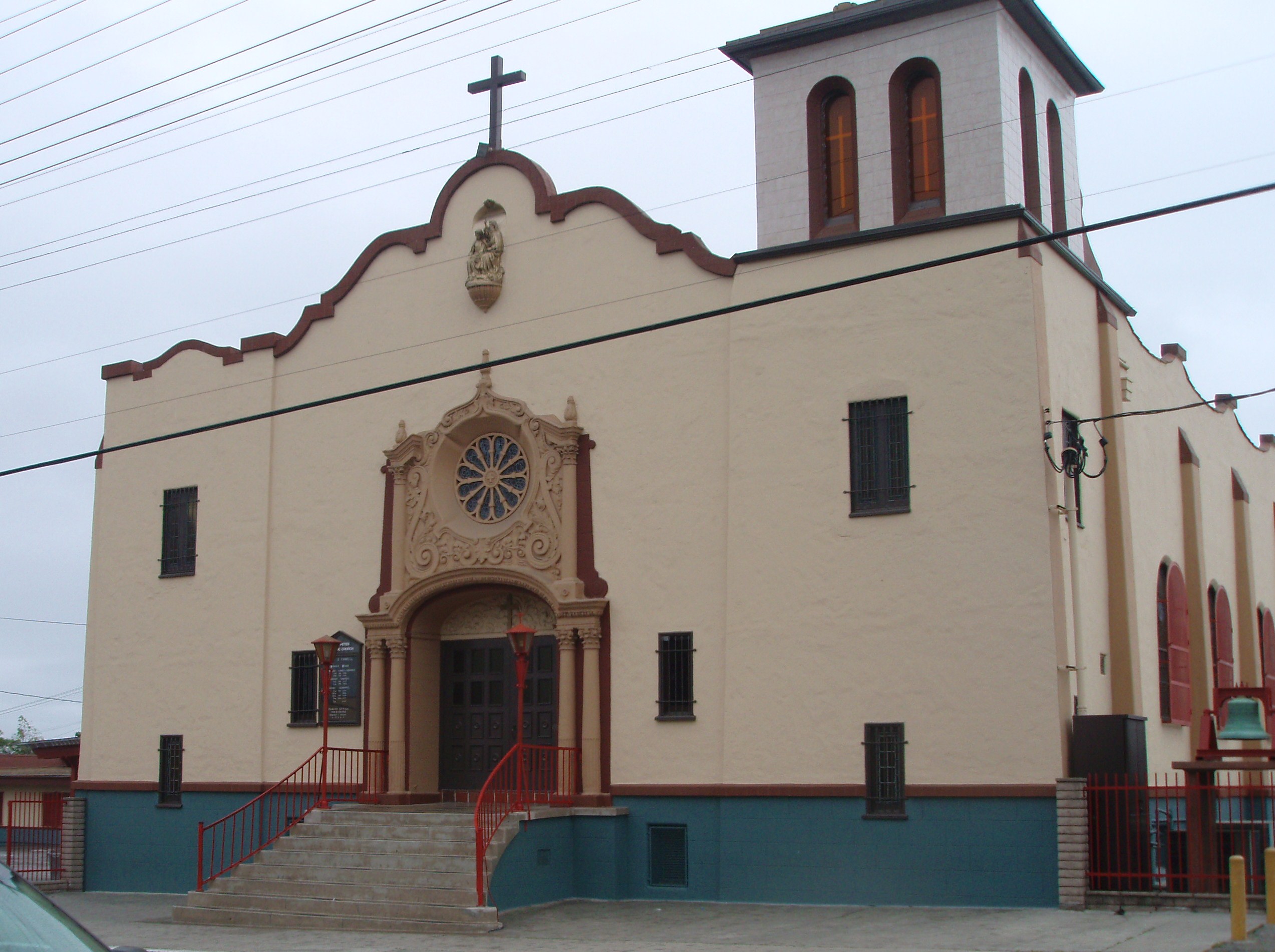
COUNCIL HISTORYGetting StartedOn May 10, 1914, Angels Gate Council 1740 was established in San Pedro. "Angels' Gate," the name of the entrance to the harbor of the city of Our Lady of the Angels, was chosen as a fitting name for the new council. The Panama Canal had been opened that year, enhancing a period of growth for the Port of Los Angeles, the city, the Harbor District (as San Pedro and Wilmington were then called), and of the Knights of Columbus. In 1909, San Pedro and Wilmington had voted overwhelmingly to become a part of the city of Los Angeles.Columbianism had already come to California in 1902 when James J Gorman, an organizer from Supreme, set up Councils 615 in San Francisco and 621 in Los Angeles. A territorial deputy was assigned to establish a state council by getting the required number of local councils. This job fell to Joseph Scott of Council 621. Assisted by State Warden Joseph Coyle, Angels Gate 1740 was the twelfth southern California council that he established, "in a thriving port city with a faltering Christianity." On Sunday May 10, 1914, after much spade work by leading Catholic men of the community, and under the pastorate of Father Patrick J. McGrath of Mary Star of the Sea Parish, Angels Gate Council was instituted. All three degrees were exemplified on that Sunday, with 40 charter members. The Knights immediately undertook a significant role in the parish, particularly in fund raising. They helped with barbecues and game nights to raise funds for the school class rooms. They acted as guards of honor for bishops and cardinals at special parish functions, and worked vigorously and successfully to withstand the attempts of the Ku Klux Klan to close Catholic schools. Fraternal and family activities included theatrical entertainments (such as "The Troubles of a Secretary") and receptions, as reported in "The Columbian" magazine. According to this publication in November, 1918 "A fifty foot addition has been built onto the Knights of Columbus Building at the US Naval Base, San Pedro. Recently, through the California Temple of Arts, F. Constantino, director, an excellent program was presented in the building." A permanent home was not to become a reality during the years to follow.Some ill-fated real estate ventures were to be undertaken. Joseph Scott may be considered the father of the Knights of Columbus in California because of the work he did in establishing not only many local councils, but also starting the first state council and the first State Deputy. He was a Knight Commander of St. Gregory and commissioner for overseas work of the Knights of Columbus. As a long time lawyer, he was an honorary dean of the Loyola Law School. His civic accomplishments included founder of the Southwest Museum, President of the Community Chest, co-founder of the Los Angeles Chamber of Commerce, and president of the Los Angeles city school district. Because of his work with the Knights and the community, he became known as "Mr. Los Angeles," and is commemorated by his statue dedicated in 1967 in the city civic center. One of his sons became the Rev. Msgr. George Scott, pastor of Mary Star of the Sea, 1946-1975, chaplain of Angels Gate Council 1740, and the Southern California Chapter, as well as leading many other church and community affairs. John F. Dodson, a direct descendant of early Spanish settlers, was elected as the first grand knight in 1914. His death notice in the diocesan newspaper, The Tidings in 1923 read: "Fortunate, indeed, are those who could count John F. Dodson among their acquaintances. He exemplified all that is good and noble-a true friend and loyal Knight. In his death, there was lost to Columbianism, one of the most gallant stars in the history of the state." During James J. Sullivan's term as Grand Knight, 1917-1918, the council purchased two lots on the northwest corner of Gaffey and Ninth Streets, on which it hoped to build a home. Later, the council contributed to the building of the new Mary Star of the Sea school building on 7th Street, at a cost of $80,000, dedicated in 1923. Brother Miles Regan (Regan & McLin) was the builder of this school. World War I and the Pacific FleetIn 1917-1918, the United States participated in the Great War in Europe, a generation later to be re-named "World War One." Thirty three members of Council 1740 served in this war, whose names are listed in a publication "The Knights of Columbus in Peace and War." One of them, Ivan H. Guerin, a resident of Los Angeles, died in military service. During this time, the humanitarian service of the Knights, both overseas and at home was well known especially for providing canteens and religious articles. Service continued after the war with support of returning servicemen. Following the conflict in 1918, orders were given by the Supreme Council to the local councils to establish educational courses for members of the order and others that may wish to avail themselves of commercial and industrial educational opportunities. At the state convention in 1921 in Long Beach, a resolution was passed urging the building of a recreation center at San Pedro for the benefit of the men of the (US Navy) fleet. In 1919 when the Navy was building up the Pacific Fleet, San Diego Bay was considered too shallow for its largest ships, so the battleships were sent to anchor in San Pedro Bay. By 1934, 14 battleships, two aircraft carriers, 14 cruisers, and 16 support ships were based at San Pedro.A letter from Financial Secretary James J. Sullivan to Rev. H.H. Benso, Pastor, Mary Star of the Sea, dated May 16, 1919, reads in part, "At a meeting of the Council… the matter of the purchase of property for erection af a new school in San Pedro came up for discussion……it was your desire that some action be taken….by the Council. It was voted that a Committee….be authorized to look into the matter of purchase of property for the needs of the Council and to confer with you on the school property proposition. It was also voted that the Council cooperate …with yourself toward the raising of funds for the school property." The elementary school had been established in 1914 by the Sisters of the Immaculate Heart Order. This letter may have been regarding new buildings. The Mary Star of the Sea High School was not founded until 1951. As reported in "The Tidings" June 8 1923, Father McGrath's pastorate at Mary Star of the Sea, "was eventful, for the growth of the city, and the subsequent increase in the congregation, justified in his judgment the establishment of a school and accordingly he created a temporary structure. ….the Sisters of the Immaculate Heart of Mary assumed its charge." His pastorate, too "saw San Pedro transformed into a practical naval station, and his kind cooperation with the Knights of Columbus War Activities Bureau in that city, so capably managed by Secretary T.K. Adland and Chaplain C.S. Raley, will always be gratefully remembered by thousands of Catholic boys who passed through San Pedro." The Columbus Building AssociationBy 1923, the growth of the council had kept pace with the growth of the city and the port. Membership had increased to three hundred fifty with a large potential for increase remaining on which to draw. Reflecting the optimism of the time, it was pictured in the future "a council of fifteen hundred members, enjoying the happy privileges and comforts of a fully equipped Knights of Columbus home."Building of a home was decided by the council in January 1923. Incorporation articles of "The Columbus Building Association" were drawn up and approved by the state Secretary of State. Eleven members of the board of directors in turn elected the officers, including C.L. Monaghan, President, and R.W. Dalton, Treasurer. A drive for the sale of stock was undertaken. The proposed building, as planned, provided for the use of ten thousand square feet of ground, owned by the council, at the Northwest corner of Ninth and Gaffey Streets, with a building of 100 x 100 feet. There was a remaining lot of 75 x 100 feet adjoining on Gaffey Street, which could be used for expansion, but in the meanwhile would be used as an outdoor gymnasium; tennis courts and handball courts. The building itself, of three stories was intended to be a gathering place for the Catholic community of the Harbor District as well as a gathering place for the Knights of Columbus. It was planned to be self-sustaining with income features included in its construction. The ground floor would be divided into retail stores to be leased for business purposes. The rear of the ground floor would be excavated to give the proper height for a large gymnasium. The second floor would include an auditorium with a dance floor and a good sized stage and dressing rooms. A smaller lodge room for weekly meetings of the Council and for rental to other lodges and clubs of the city; pool rooms, together with a kitchen and banquet hall were also planned. The main entrance for all this would be on the Ninth Street side. The third floor would be of "L" shape construction and provided with bachelor accommodations for members of the council. Besides all this, it was anticipated the new building would be "not only a monument to the constructive work that is being accomplished by the members of the Angels Gate council, but to have even greater significance not only for the people of the Harbor District, but for the five to eight thousand young Catholic men of the Pacific Fleet, who are with us eight or nine months of the year. It will serve to keep among all Catholics a greater spirit of harmony and unity. It will also serve to keep in the proper environment for the boys and girls of the district of today, who will be the men and women of tomorrow, which, after all, should be the adopted task of every true Catholic. After all, for whom must we depend on for the future propagation of the Faith if not upon the children of today? This is the ambition and desire of every member of the Angels' Gate Council." (From The Tidings, the official organ of the Diocese of Los Angeles and San Diego, and the Apostolic Administration of Monterey and Fresno, Est. 1895.) Later that year, on September 14, 1923, C.L. Monoghan, President of the Columbus Building Association, applied to the city building department to "repair a one story fraternal club house, 50 x 145 feet, at 817 to 837 S. Gaffey Street, to conform to all city ordinances." Further alternations to the one story building were approved on March 19, 1924. No records are found of a three story building being constructed on those premises. The San Pedro News-Pilot reported on February 21, 1933, "The Knights of Columbus Council 1740 will serve a Turkey Dinner in the Knights of Columbus Hall, 9th and Gaffey Streets, for which the patronage of the public is invited. Card games will follow. The Catholic P.T.A. and the Mary Star of the Sea Altar Society will assist." County tax records on this property show an increase in assessed value between 1923 and 1924 from $2090 to $7600 (1923 dollar values) with title in the name of "Knights of Columbus Hall and Bank of America." Records also show that property values declined as the years wore on during the Great Depression. On February 19, 1935, the property was sold for taxes, to private persons. Perhaps public turkey dinners did not raise enough funds to save it. The early history of Council 1740 reflects an abounding optimism and enthusiasm during this period of growth and financial prosperity, which was to be shattered by the loss of the hall, and by the economic conditions of the Great Depression in the 1930s leading up to World War II. During this time the records of the council had not been preserved as carefully as during the World War I period. World War IIThere are no data that show who served in the military during World War II; undoubtedly many members served in that conflict. William D. Roberts of San Pedro was killed in action in Italy in April 1944, the only known fatality from council 1740 and one of 28 Knights from 22 councils on Southern California who made the supreme sacrifice. Their names are reproduced on a Roll of Honor in the State Archives.In December 1944, the council's bulletin, "The Harbor Knight" was professionally printed with the advertising support of local merchants. Wm. P. McOsker was Grand Knight. Some of the activities reported included a donation toward the purchase of a Catholic Maritime Club House in Wilmington, and a call for volunteers to assist there, with the pastor's activity as Port Chaplain. Boy Scout Troop 208 celebrated its 20th anniversary. It was also reported from the Chapter that councils are urged to supply names of volunteer families who would take in a service man over the weekend, to "help in readjusting men coming from battle service to civilian life." Congratulations were extended to Brother Vincent Thomas, council advocate, on his re-election to the California State Assembly (Vincent Thomas served as State Assemblyman from 1941 to 1979. San Pedro's iconic bridge is named in his honor. He died in 1980.) Council Growth in the 50sAfter the war years, we find that in 1951 an installation of officers was held "at the hall on 221 Sixth Street, San Pedro." Meanwhile the council voted to purchase Carpenters' Hall, at 951 Ninth Street. The Giosue DiMassa family lent $5000 for a down payment at 6.5 percent interest. In November of the same year, a blessing ceremony was held at the newly acquired hall, together with a holy year pilgrimage between Mary Star of the Sea and Holy Trinity churches. These services were held at both churches, with a motor cavalcade to the second one. Msgr. George M. Scott and Father Gallagher respectively, presided. In 1952 there are newspaper reports of officers' installations at 351 9th Street and in 1957 at the K of C Hall at 571 West 9th Street. In 1959, installation was held again at 351 9th Street (could these reports be mistaken for 951 9th Street?). It was decided to sell the hall in 1963, although new premises had not yet been found. Meetings were then held at the Norwegian Lodge's Ulabrand Hall.The post World War II years saw a resurgence of growth in the council. Candidates of the 20th and 25th districts were exemplified in the Third Degree in San Pedro on May 5, 1947. The 1954 membership roster listed 272 members, reflecting many old San Pedro families including Bozanich, Castagnola, DiMassa, diMeglio, Ferrell, Iacono, Mardesich, Marron, McOsker and Rados. The Grand Knight, William McOsker, served two terms. Many members were business, professional, and community leaders; a partial list included Eloi Amar, General Manager of the Port of Long Beach; Roger Aubochon, MD; Walter Binns, Municipal Judge; George Casserly, MD; Anton Despol, a founder of Fishermens' and Merchants' Bank; Louie Moore, M.D.; Jackson Pearson, Port Pilot; John Real, Judge; Melvin Schueler, D.D.S: Emanuel Vegher Sr., James and Joseph Vegher, grocers; Vincent Thomas, State Assemblyman. Among the council's many activities was a very successful fund raising joint district dinner dance at Ocean Pier in Santa Monica, featuring famed orchestra leader Lawrence Welk. During Nick Trani's term as Grand Knight, the state achievement award was granted for membership increase of 67 members during the Columbian year 1954-1955. In 1956 a Columbian Squires Circle was formed on January 4. 27 boys were in the charter class of candidates that was invested by the Squire officers from the Circle in Long Beach. Grand Knight Ralph Gomes announced that Rev. John Feeney will serve as Father Prior of the new Circle, and that Brother Robert Hohman, Sr. is named Chief Counselor. Other members serving as counselors include Brothers Joseph Eble, E V Vegher, Philip Cantwell and Frank Arsenault. While celebrating Columbus Day in 1959, 25 year pins were awarded to C.S Burbridge, E. H. Carroll, I. Farfan, R.T. Gustie, D. E. LaRue, R. Morris, A. H. Ogle, F. J. Rechenmacher, P. C. Roberts, R. A. Steinaur, E. V Vegher, J A Vegher, W. G. Winkleman, H.T. Moore, E.R. Koerber, W.P. McOsker and L. von Arx. FiestasThe annual Mary Star of the Sea Parish Fiesta in July has grown to be one of the largest 'social events' in the community with upwards of 50,000 people attending over a three day period. Founded in 1947 by Msgr. George Scott as chairman, Council 1740 was asked to supply most of the support group and has served very active roles in the annual fiesta ever since. The first fiesta was held at Royal Palms Beach. It featured dancing and was only a one day affair, netting approximately $10,000. In 1949 the fiesta moved to the new school grounds at 7th and Meyler Streets and became a three day event. Judge Walter Binns became the chairman in 1950 and successfully generated greater interest and increased revenues. In 1962 he passed the responsibility to another council member, Samuel Palmer, who continued to chair the event for twenty years, during which time the parish debt was eliminated and many improvements were made. Brother Palmer also served as the Centennial Celebration chairman for Mary Star of the Sea in 1989.The annual Fisherman's Fiesta and parade of fishing boats with shore side attractions provided another opportunity for Knights' participation. The San Pedro News-Pilot reported on September 24, 1951: "A Thanksgiving high mass at Mary Star of the Sea was held proceeding the blessing fo the fishermans' fleet at Fishermans' Wharf. More than 700 attended. Cardinal Archbishop James Francis McIntyre presided in his cappa magna (a liturgical vestment consisting of a hooded cape with a train), worn only on occasions of the highest importance. The rich robes of the clergy contrasted with the black uniforms trimmed in white, worn by the Knights of Columbus, sixty members represented. Many clergy attended and all marched to Fishermans' Wharf for the Blessing of the Fleet. San Pedro was then a leading center of the fishing industry in the United States with over 16 canneries operating. In 1938 there were 42,000 spectators at the fiesta and in 1952, 150,000 people celebrated on the San Pedro docks. By the late sixties this event declined along with the fishing industry, and was reduced to a small parade of fishing boats lasting throughout the 1980s. It has been commemorated by council 1740 with a life sized statue of St Peter, the Galilean fisher of men, the patron saint of fishermen, in front of Providence Little Company of Mary Hospital. (Contrary to popular belief, this St. Peter, the 'rock on which I shall build My church,' is not the one for whom San Pedro was named by the Spanish explorer Cabrillo. It is correctly St. Peter of Alexandria, a 4th Century bishop, on whose feast day it was in the Spanish liturgical calendar when he named it.) 1957 marked the Diamond Jubilee of the Order's founding in Connecticut in 1882. Council 1740 joined with some 20,000 Southern California members of the Knights in commemorating the event. On April l7 a mass was held at St. Vibiana Cathedral, followed by a breakfast at the Statler Hotel. Samuel Palmer, who was Grand Knight stated to the press "It is the Knights of Columbus' main objective to make converts, but because this is a country where there are diverse religious beliefs, the Knights of Columbus believes that it is essential to national welfare that various groups understand one another." For thirty years or more, Council 1740 has aided and supported St Peter's annual parish fiesta in honor of the Virgin of Guadalupe (Feast Day December 12). It features a procession throughout the city streets. In 2011 the Council's 4th Degree Honor Guard led an estimated 1500 marchers, including council members, in this colorful procession which included a pilgrim copy of the miraculous "tilma" of St. Juan Diego (Feast Day December 9). This was followed by a solemn mass outdoors with mariachi musicians, after which the fiesta continued with entertainment throughout the day. One of the food booths was manned by council members, with proceeds donated for parish expenses. This fiesta commemorates the appearance of the Virgin Mary to native Juan Diego at Tepeyac, Mexico City in 1541, asking him to build a church on the site. The bishop needed proof of the apparition, so the Virgin Mary asked Juan Diego to pick roses on the hilltop. He filled his "tilma" (poncho) but when he showed the bishop, there was an image of the Blessed Virgin. This original miraculous "tilma" has been venerated there ever since. In 2011 the Supreme Council commissioned 40 digital copies to be sent around the United States on pilgrimage. One of these was made available for this 2011 event at St. Peter's. The Catalina ClubSt. Catherine of Alexandria parish in Avalon, Catalina Island, lies within the jurisdiction of Council 1740. In 1914 it was charter member Peter Lubetich, a resident of Avalon, who proposed the name of "Angel's Gate Council." On April 14, 1958, Grand Knight Joseph Hochreith, and a group including Brothers Grant, Rados, Halpin, Trani, Pesco, Mundi, deKay, Ferrell, Shanahan, Polucha, von Slomski, and McLaughlin, traveled to Avalon where they held the council's regular meeting. Also present was "Fr. John" presumably the pastor of St. Catherine's. There was a showing of the film "These Men They Call Knights." The Supreme Council's guidelines provide for the formation of Knights of Columbus clubs in remote locations where there are not enough to form a council. On May 12, 1958, the Catalina Club held a meeting at Avalon for the purpose of organizing a membership drive. On June 9, Council 1740 heard the financial report of the Avalon Club, [sic] which they approved and paid $88.16 to the club. The minutes of June 12, 1961 report payment of $100 for "agreement to Catalina Council. [sic]" No further record of Knights of Columbus activity in Avalon has been found.First 50 Years CelebratedPast Grand Knight Vicente Diaz (1963-64) recalls the Golden Jubilee party held to celebrate the 50th anniversary of Council 1740's founding on May 2, 1964. More than 200 Knights, friends and their ladies attended the dinner at the Officers' Club of Fort MacArthur. A golden book of photographs in the council's archives commemorates this event. Past Grand Knight Thomas Ferrell was master of ceremonies, Municipal Judge Walter Binns was the keynote speaker. Other dignitaries included Rt. Rev. Msgr. George Scott; Reverend Father Vita, Council Chaplain; Stacy Rodman, District Deputy; Fred Pelletier, State Deputy; Harold Joyce, Chapter President; and six past grand knights. A special guest was Brother Alonso Ogle who was given an award for being the last remaining charter member from 1914. Following the dinner, music and dancing were enjoyed by the Knights and their ladies on this auspicious occasion. Participating in the arrangements were Past Grand Knight Michael Shanahan, chairman, and Major (ret.) John J. Falbe Sr., Chancellor of the Council.During the ensuing years the council continued support of the three parishes, Mary Star school, and their various fund raisers. The Mary Star of the Sea annual Fiesta which was becoming a major San Pedro event, was heavily supported by the Knights, and eclipsed all others. For several years the Knights held fundraising booths at the Holy Trinity and St Peter's fiestas, as well as the fiesta held by the Fermin Lasuen Boys' High School (1959-1971). By 1985 these smaller fiestas had become extinct. The Fishermans' Fiesta was declining and for the first time the council decided not to participate. During 1985-1988 there are several references in the minute books of the council's participation in St Margaret Mary's Fiesta in Lomita. An examination of the Treasurer's books from January 1962 until 1972 shows the greater amounts by far were paid to the Supreme and State Councils for per capita tax and special assessments. Much of this was for Columbian Charities and special charities including the major Southern California support of Rancho San Antonio Boys Home. Contributions to local entities included the Retarded Childrens' Foundation of San Pedro, Boy Scout Troop 208, The Claretian Fathers (probably mass stipends for deceased members), Father Gallagher, chaplain, and the Victory Sisters, Immaculate Heart Sisters, the Presentation Sisters and the Salesian Sisters. Rent was paid for use of the hall to Ulabrand Hall, as it had been paid to the Building Association in the past. Building Associations were set up as independent non-profit corporations, expected to be self-sufficient from rentals not only from the council, but from the public. From 1966 to 1968 rent was paid to "Father Martinelli", and after that utilities (gas, electricity and telephone) were paid directly. In 1959, the Southern California Knights decided to provide the major support for Rancho San Antonio Boys Home, the only Catholic home of its kind in Southern California. It was originated by Catholic Big Brothers in 1933 in Redondo Beach, and today, located in Chatsworth, provides help and guidance to over 100 boys and their families. Council 1740 regularly supports this cause. Boy Scout Troop 208, which celebrated its 20th anniversary in 1944, continued to be sponsored by the council, not only monetarily but with knights themselves being scoutmasters while their children participated. In time, the troop faltered for lack of leadership and interest. Nothing more is read or heard of the Columbian Squires Circle either, which had been established in the 1950s. The annual Tootsie Roll campaign for aid to intellectually disabled persons, has become a major Knights' charity, with Council 1740 regularly playing an active part under the chairmanship of John Fer. Some other charities include Catholic Charities, Right to Life, Crippled Children's Foundation, Catholic TV, and the Catholic Guild for the Blind. Quarterly corporate communion Sundays were observed at all three parishes. This custom, during which knights and their families attend mass and receive communion in a body, is a guideline of the Supreme Council. These masses were offered for the repose of the souls of members departed. Meetings continued to be held at 'the hall' at 8th and Cabrillo until 1973, then for about ten years until 1983, at the Odd Fellows Lodge on 10th and Gaffey Streets. In the meanwhile, the Angels Gate Building Corporation had been formed in 1973. Grand Knight Joseph Gualini appointed Lloyd Nance, Edwin Boher, Wm. Waterson and James McDowell to this board. They purchased a building at 19th and Cabrillo streets from the Jugoslav Women's Club where meetings were held and the premises rented out to other organizations. The building was ultimately sold to the Italian American Club. Decline and RenewalThe hall on Cabrillo Avenue was the source of complaints from neighbors and some dissatisfied members who dropped out. The council moved their meeting place to St. Peter's Hall. The minute books show, surprisingly, that official meetings were not held for lack of attendance, with a brief resurgence in 1988, only to decline again in attendance and activity with the last record made on May 7, 1991. On August 2, 1994 a reorganization meeting convened under Grand Knight Sam Palmer. The minutes from that occasion read: "This was the first office (sic) meeting with enough members to conduct a meeting in 4 years."In 2009 although the roster showed 68 members, there was only a small core group of active members. Sam Palmer served multiple terms as grand knight, although Supreme's guidelines suggest a maximum of two consecutive terms. With only 18 active members, they tried to keep the council together, having membership drives, but did not succeed. In 2008 when Father John Provenza was assigned as pastor at Mary Star of the Sea, he saw a need for restoring the Knights of Columbus to a leading role as a bridge between Church and Community, as well as being a service to the Church. It was under his leadership that the men of the parish came up with a new slate of officers, headed by Nick Vilicich who served two terms as Grand Knight. Since the initial 34 new members were received in 2009, the council has grown to 150 members in 2011, and has become an active and vital participant in support of all three San Pedro parishes. With Ken Hall as Grand Knight in 2011, the council continues to grow and flourish in all activities. A major social and fund-raising event was the First Annual Columbus Day celebration honoring Fr. Provenza, and organized by Brother Tony DeGirolamo. 275 guests enjoyed an Italian dinner catered by Danny Maricich and dancing to the music of the dynamic "Duo Domino." After the council was revitalized, meetings were held in Mary Star parish rooms, until Pastor and Chaplain Fr. Provenza assigned permanent rooms in the basement of the former high school auditorium. In 2010 the council was able to occupy this refurbished new home, while final renovation touches, including a new kitchen, were being made largely due to the talents of Brothers Joe D'Amato and Bob Costales. Council 1740 is dedicated to the Sacred Heart of Jesus. Every meeting opens and closes with an ode praising the Sacred Heart. (The feast day is nine days after Pentecost.) The origin of this popular devotion was St. Margaret Mary Alacoque, a French nun who experienced her final vision of Jesus in 1673, instructing her to go forth and proclaim the devotion to His Sacred Heart. After years during which her teachings were subject to severe and minute examinations, her mission was finally recognized even by those who had shown her the most bitter opposition. (For details, refer to the Catholic Encyclopedia, www.newadvent.org/cathen/09653a.htm.) During recent years while the council struggled to survive, some have drawn a comparison to the sufferings of St. Margaret Mary, and the years it took before the right persons and circumstances came along to accept and support the council, allowing its growth and expansion. Even though the council was not very large nor very active during the late 80s and early 90s, credit must be given to those few devoted members, for keeping the organization a viable entity in the community. Today, in 2011, Angels Gate Council is thriving and growing while promoting the Columbian ideals of charity, unity, fraternity and patriotism, not only in the parishes, but in the community as well. Thanks to the following for their contributions to this history
(There may be others with information to offer. If so please contact Leo
Kowalski at konnica@ca.rr.com.): James McDowell PGK, Nick Vilicich, PGK,
Vicente Diaz, PGK, Supreme Council Archives, California State Council
Archives, Los Angeles County Assessor, San Pedro Historical Society
Archives, Los Angeles Dept of Building & Safety, Sam Palmer's
Daughter, San Pedro News-Pilot, The Tidings, "Seventy Years of Service,"by
Peter T. Conmy, Mary Star of the Sea Centennial Book, websites of Mary
Star of the Sea and Holy Trinity parishes. | |||||||||||||||||||||||||||||||||||||||||||||||||||||||||||
|
| ||||||||||||||||||||||||||||||||||||||||||||||||||||||||||||
|
| ||||||||||||||||||||||||||||||||||||||||||||||||||||||||||||
| ||||||||||||||||||||||||||||||||||||||||||||||||||||||||||||